The energy system of the future will be digital, resilient, and sovereign
At the European Forum Alpbach, Green Energy Lab and BearingPoint, together with decision-makers from industry, the energy sector, and the technology sector, identify key areas of action for a resilient and sovereign energy system of the future: intelligent data use, cross-sector collaboration, and the development of European digital capabilities.
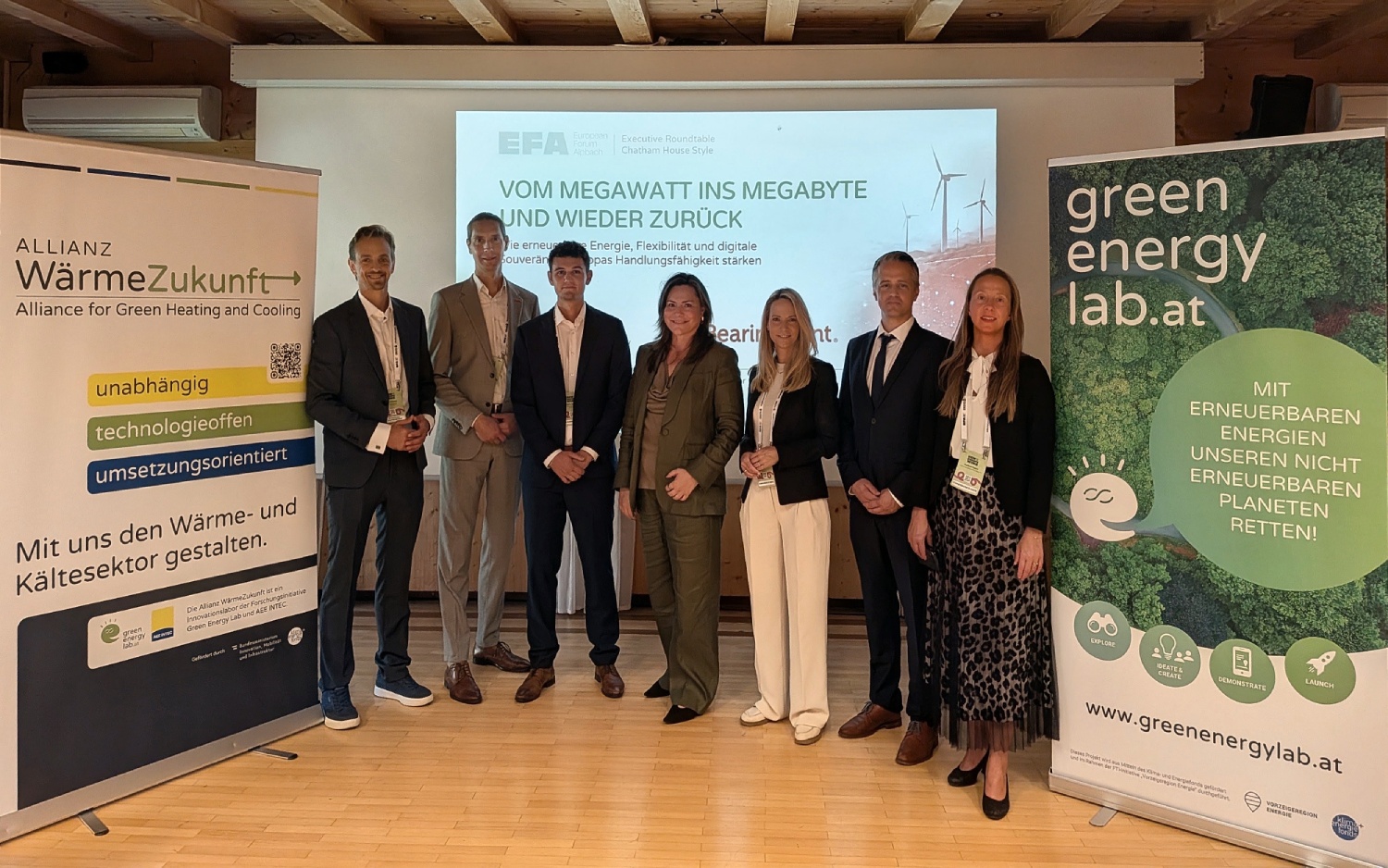
from left to right: Rainer Matiasek (Green Energy Lab), Gerald Tretter and Stefan Struggl (BearingPoint), Andrea Edelmann, Julia Weberberger, Klemens Marx and Susanne Supper (Green Energy Lab) © Green Energy Lab
Alpbach/Vienna, 4 September 2026 – How can we make Europe’s energy system renewable, flexible, resilient, and sovereign at the same time? What opportunities does digitalisation offer, and what risks arise from critical dependencies? At the Executive Roundtable hosted by Green Energy Lab and BearingPoint in Alpbach, decision-makers from industry, the energy sector, and the technology sector identified three key areas for action in the digitalisation of the energy system: a reliable data foundation and intelligent control systems for better integration of renewable energy, the involvement of a broad range of stakeholders, and the targeted development of technology and AI capabilities in Europe.
The transformation of the energy system is already underway, but there is still a long way to go. Digitalisation can support the sustainable development of the energy system of the future, for example through the flexible control of generation assets and energy storage systems, as well as AI-supported forecasts of energy generation and consumption. At the same time, it can create new critical dependencies, for example on data and IT systems.
“Digitalisation enables greater flexibility in the energy system. This accelerates the integration of renewable generation from wind and solar PV and reduces our dependence on fossil fuel imports,” says Andrea Edelmann, Chairwoman and Spokeswoman of the Board of Green Energy Lab. At the same time, she emphasises: “Alongside energy sovereignty, we also need to keep digital sovereignty in view so that we retain our ability to act.”
Gerald Tretter, Partner at BearingPoint, sees a clear need to address the transformation of the energy system and digitalisation together: “A resilient and sovereign energy system cannot be built through new energy sources alone. What will be decisive is whether we can also manage the growing complexity digitally, where data is turned into operational intelligence and connectivity into controllability,” says Tretter.
Diversifying Energy Sources, Reducing Dependencies
Recent geopolitical tensions and conflicts have highlighted the disadvantages of an economy that is heavily dependent on oil and gas. The need to diversify energy supply and develop new energy sources is a common challenge for all member states of the European Union. This will inevitably require a stronger focus on renewable energy, not only to mitigate climate change, but also to strengthen political sovereignty and economic resilience.
“The transformation of the energy system is a complex challenge that no single actor can solve alone. Digitalisation plays a key role in this process. This is exactly where we come in, bringing decision-makers from the energy sector, industry, and the technology sector to the table,” says Klemens Marx, Managing Director of Green Energy Lab.
The aim is to harness the opportunities offered by digitalisation while also identifying the associated risks, and to translate these into concrete approaches for building a resilient and sovereign energy system. Against this backdrop, the high concentration of software and expertise among a small number of technology companies outside Europe is a clear concern. However, the digitalisation of the energy system itself is not in question, Andrea Edelmann emphasises: “The energy future will be digital. To make this possible, we bring together expertise in energy, data, and technology with customers’ knowledge across company and industry boundaries. This is the kind of collaboration we have been enabling at Green Energy Lab for years. And that is exactly what Alpbach was about as well.”
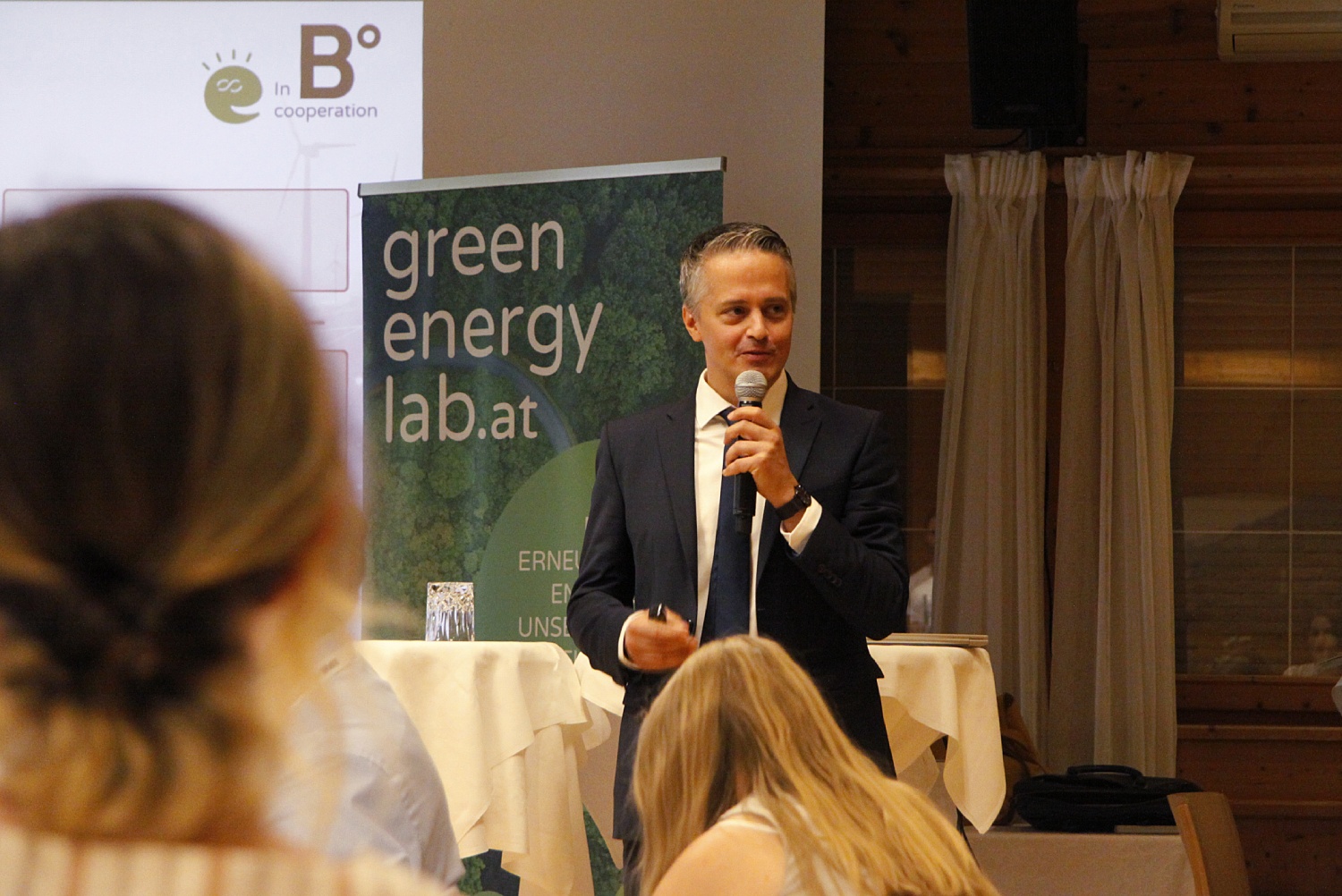
Klemens Marx, Managing Director of Green Energy Lab, moderating the Executive Roundtable in Alpbach 2026. © Green Energy Lab
Harnessing Flexibility, Engaging Stakeholders, Building Capabilities
At the Executive Roundtable hosted by Green Energy Lab and BearingPoint, participants identified concrete areas for action that need to be advanced in connection with digitalisation and the use of artificial intelligence in the energy system. Data, combined with intelligent control, is particularly important for flexibly balancing fluctuations between generation and consumption in the grid. This enables greater domestic renewable energy generation and is key to sustainable security of supply and energy sovereignty. Given the growing number of decentralised producers and consumers, a multi-stakeholder process is needed to involve as many actors as possible. It is also important to tap into innovation potential beyond the energy sector, for example in technology companies and start-ups. Europe also needs to build the capabilities required for a digital future. On the one hand, this means initiatives to develop and expand a European technology sector in the digital field. On the other hand, it also requires investment in people, fostering critical engagement with artificial intelligence, and strengthening relevant skills in education and training programmes. The challenge is to make these curricula flexible enough to keep pace with the rapid advances we are currently seeing, particularly in AI.
Green Energy Lab and BearingPoint will build on the insights from the Roundtable and continue to advance them together with stakeholders from the energy sector, industry, research, and politics. “We invite all stakeholders to get in touch with us to develop concrete innovation projects aimed at strengthening Austria’s energy sovereignty,” says Klemens Marx.
About the Executive Roundtable
The Executive Roundtable „From Megawatts to Megabytes and Back Again“ took place on 3 September 2026. Green Energy Lab initiated and curated the format, while BearingPoint served as implementation partner and co-host. The discussion took place in a confidential setting at the European Forum Alpbach.
Funding information
The Executive Roundtable at the European Forum Alpbach was organised by Green Energy Lab as part of the Alliance for Green Heating and Cooling and implemented jointly with BearingPoint. The Alliance for Green Heating and Cooling is an innovation lab operated by Green Energy Lab and AEE INTEC, funded by the Climate and Energy Fund with financing from the Federal Ministry of Innovation, Mobility, and Infrastructure.
About Green Energy Lab
Green Energy Lab is an association and incubator for applied research and innovation in the field of renewable energy and heating solutions. Its members are Burgenland Energie, Energie AG Oberösterreich, Energie Steiermark, EVN, and Wien Energie. The focus of the association’s activities is on the development, implementation and system integration of energy innovations bridging the gap between technology development and the market, and therefore functioning as an incubator and accelerator for the energy transition. With the so-called “Innovator Circle”, Green Energy Lab has an extensive network of more than 350 companies and market-oriented research facilities, technology providers and the public sector.
About BearingPoint
BearingPoint is an independent management and technology consultancy with European roots and a global reach, helping companies transform through the use of modern technologies. BearingPoint supports its clients in their transformation by combining deep industry expertise with strong capabilities in strategy, business processes, technology, and AI.
Contact
Ludwig Fliesser
Communications Manager
T: +43 676 471 93 47
E: ludwig.fliesser@greenenergylab.at