AnergIQ
Smart decision-making models for anergy networks for the retrofitting of existing neighborhoods
The heat transition is a central component of the energy transition and requires far-reaching changes even outside urban areas. In rural and suburban areas in particular, heat supply is often still based on individual fossil fuel heating systems or small local heating networks with fossil fuel boilers. This creates a significant need for ecological, infrastructural, social, and economic transformation. Anergy networks offer great potential here, as they can integrate ambient heat, geothermal energy, solar thermal energy, wastewater heat, and other sources into low-temperature networks. So far, however, such systems have primarily been implemented in new construction or in densely built-up urban areas. For existing neighborhoods in rural and suburban areas, on the other hand, suitable technical, economic, and organizational solutions are lacking.
Objective of the AnergIQ project
The aim of the AnergIQ project is to prepare an integrated innovation project for the development and demonstration of anergy networks in existing neighborhoods in Lower Austria. To this end, the two study areas will be analyzed in detail to establish a data foundation, assess feasibility, and conduct economic viability analyses. What is particularly innovative is the focus on anergy networks in existing buildings as well as in rural and suburban areas, where comparable solutions have hardly been implemented to date. Another goal is the development of a transferable blueprint and a set of criteria for evaluating such projects. In parallel, an accompanying R&D project is being prepared that will examine technical, economic, ecological, and social issues in greater depth and lay the groundwork for a future demonstration.
Approach and methodology of the AnergIQ project
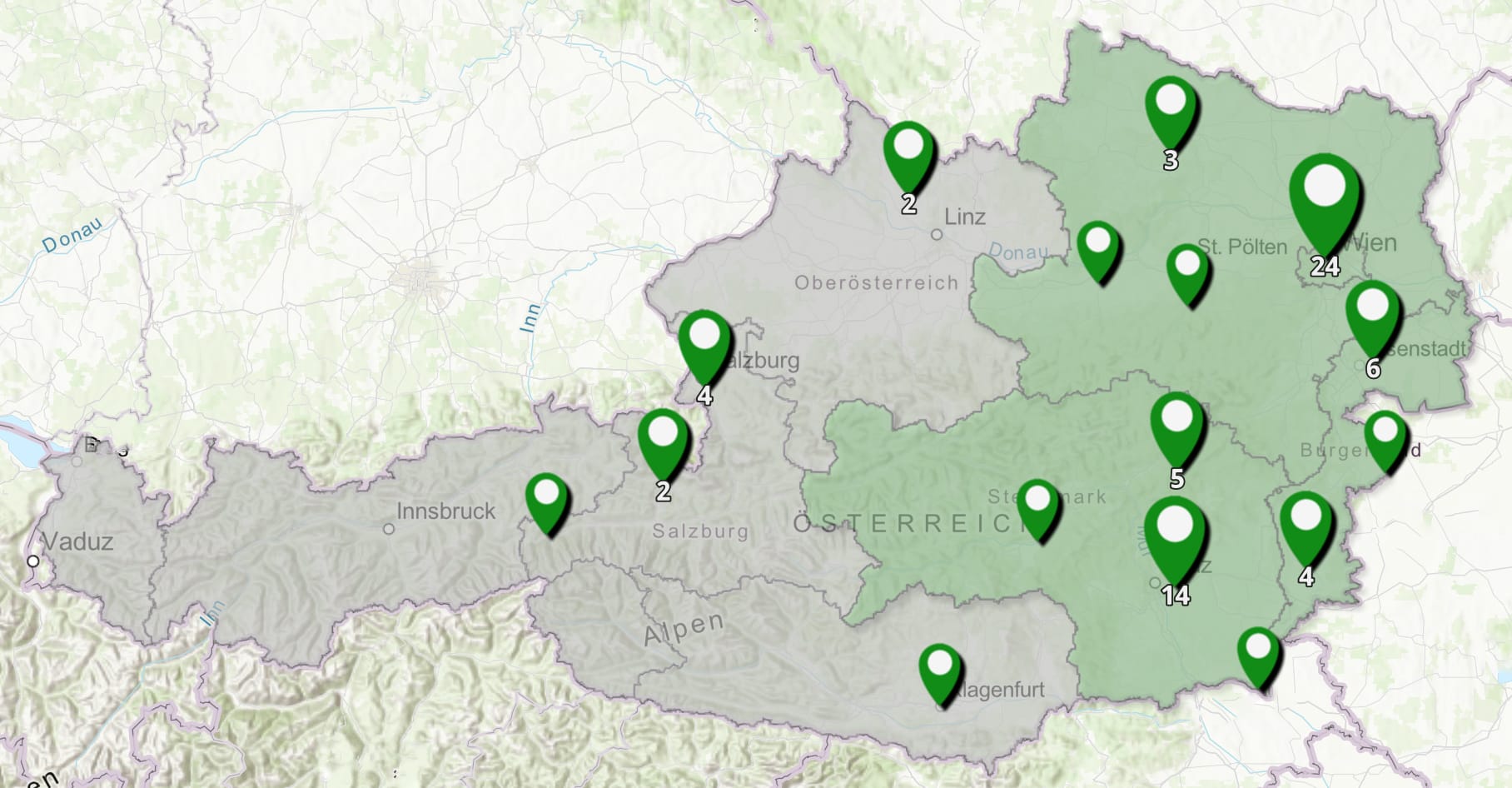
AnergIQ examines two specific existing neighborhoods, one of which is in Baden, and collects relevant technical, spatial, and economic data. Based on this data, feasibility assessments and economic analyses are conducted for the implementation of anergy networks. The focus is on adapting existing heating systems, lowering temperature levels, integrating cooling, and taking into account different rental and ownership structures. In addition, viable business and financing models are outlined that enable the participation of energy suppliers, municipalities, housing developers, and residents from the outset. A transferable blueprint and a catalog of criteria will be developed based on the results. At the same time, a follow-up R&D project is being prepared to explore technical, economic, ecological, and social aspects in greater depth.
Expected results of the AnergIQ project
AnergIQ establishes the planning and conceptual foundations for concrete implementation projects involving anergy networks in existing neighborhoods. The expected outcomes include a robust data foundation, feasibility and economic viability analyses for the two study areas, and a transferable blueprint for similar neighborhoods. In addition, a set of criteria for evaluating such projects will be developed. Another key outcome is the development of initial outlines for viable business and financing models designed for long-term sustainability and risk minimization. A particularly relevant model solution is the application of the anergy network approach to existing buildings in rural and suburban areas, including cooling options, systemic integration, and socially acceptable implementation models.
Benefits and impact of the AnergIQ project
AnergIQ makes a significant contribution to the heat transition by developing innovative and resource-efficient supply solutions for existing neighborhoods in rural and suburban areas. From an environmental perspective, the project supports the decarbonization of existing local heating networks, the replacement of individual fossil fuel heating systems, the reduction of local emissions, and the improvement of the microclimate. Economically, it lays the foundation for sustainable business models and regional value creation. Socially, it promotes socially responsible solutions and the involvement of municipalities, housing developers, energy suppliers, and citizens. By focusing on scalability and replication, AnergIQ lays the groundwork for a broad rollout of anergy networks and can provide impetus for energy communities as well as follow-up projects in the areas of research and implementation.
This project is funded by the “Leuchttürme der Wärmewende (Flagship Projects for the Heating Transition)” program and is being carried out as part of the Alliance for Green Heating and Cooling innovation Lab.