
PnP controls TABS
Development of a plug-and-play control strategy for energy-flexible buildings with a focus on heat pumps
This research project has been completed. Download the PnP controls TABS Vienna Publishable Final Report here.
The increasing use of energy from renewable sources requires greater balancing of production (local, regional, and national) and consumption within the electricity grid. The use of heat pumps (HP) in combination with thermally activated building components (TABCs) offers significant potential for such load shifting, as these components can store heating or cooling energy over longer periods due to their high thermal mass. As a result, using appropriate control strategies, the operation of the heat pump can be flexibly adjusted to promote increased use of renewable energy within the building. At the same time, on a large scale, this creates significant potential for reducing the load on the power grid. Thus, the project makes a significant contribution to the integration of renewable energy and to reducing electricity consumption.
The widespread adoption of this concept is currently hindered by the lack of a broadly applicable, standardized control strategy. The goal of this project was therefore to develop control strategies for heat pumps in combination with thermally activated building components that can communicate with renewable energy generators inside or outside the building and optimize the supply of useful energy accordingly. The requirements for indoor climate must always be met. Above all, the open-source and plug-and-play approach (technology that allows external devices to be connected and used immediately with minimal effort) enables broad application.
Involvement of all partners to create a versatile solution
The active involvement of relevant companies, such as heat pump manufacturers, energy suppliers, control engineers, and building services engineers, as well as research institutions was essential from the very beginning. This ensured that the solution developed in the project could ultimately be integrated as open-source code by interested users of control technology.
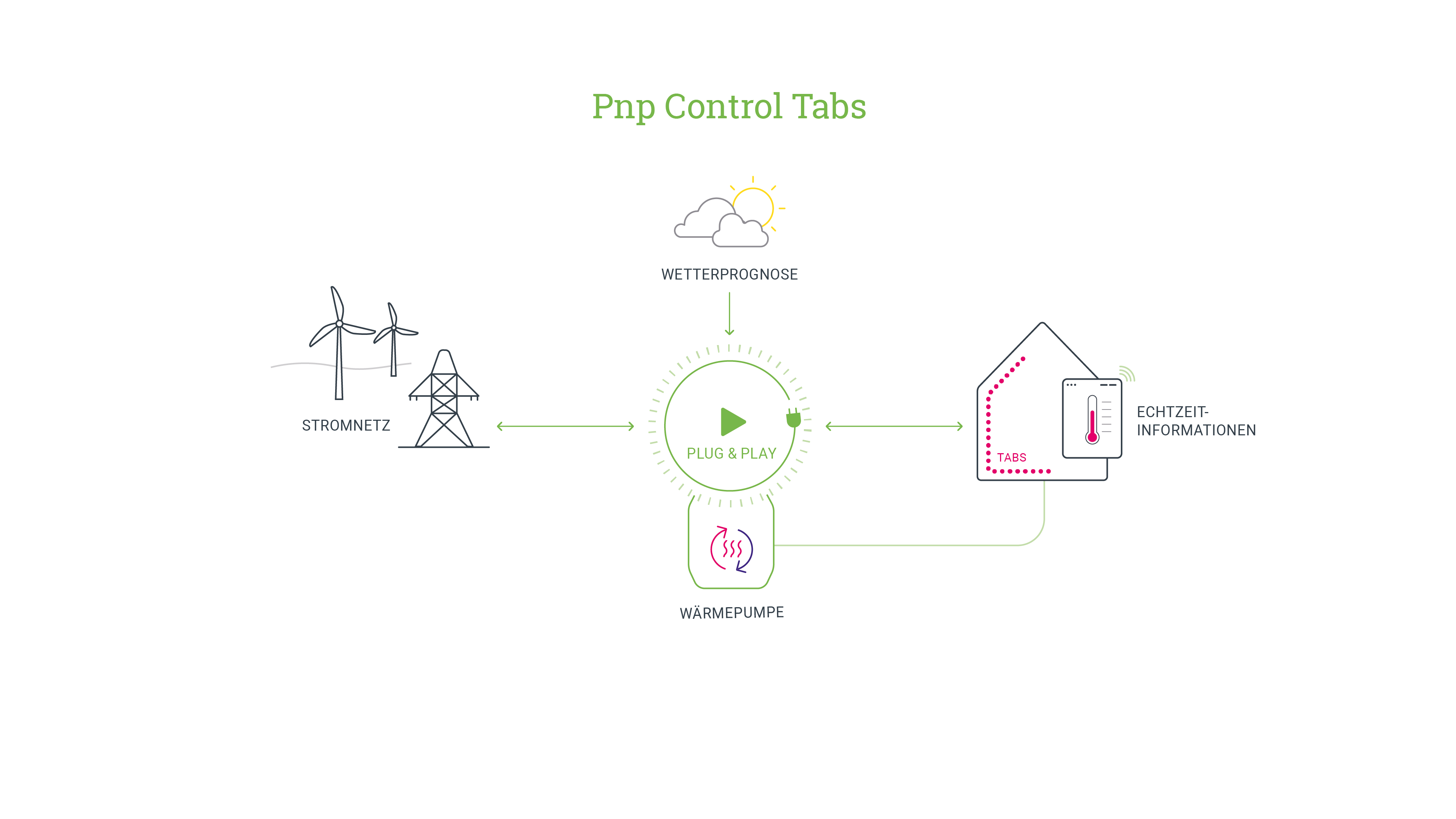
The control strategies developed were integrated into several demonstration sites and tested in operation. At the same time, a platform, known as the “Grid Data Manager”, was developed for “Grid Data Communication.” The Grid Data Manager is a centralized, automated software agent that connects to all verified and authenticated participants in the power grid via encrypted connections (VPN) and exchanges data with them (Grid Data Communication).
Data exchange via Grid Data Manager (currently):
- Weather forecasts by location
- Price signals from renewable energy suppliers
- Forecast data for energy consumption
- Opportunities for (electric) load shifting
The software components required to implement grid data communication among power grid participants are available for a “proof of concept” and will be technically verified and validated in a subsequent phase in collaboration with grid operators and energy suppliers.
Links:
- PnP controls TABS in TGA Planerjahrbuch 2025 (available in German only)
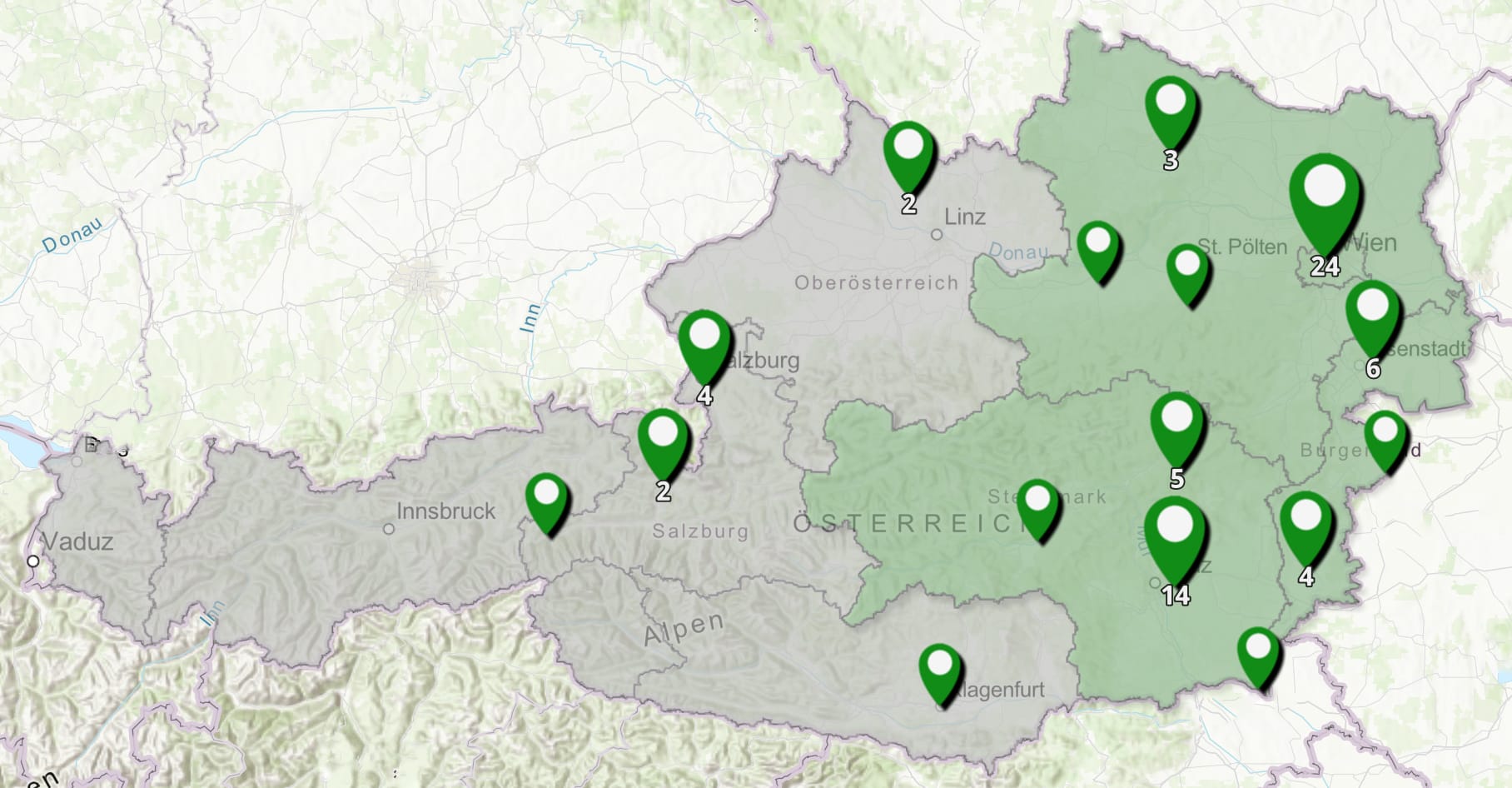
The following model solutions were being developed in the PnP controls TABS project:
CONTROL OF HEAT PUMPS IN THERMALLY ACTIVATED BUILDINGS
Media reports on the project
PnP controls TABS in the TGA Planerjahrbuch
Guest article by Anita Preisler in the TGA Planerjahrbuch 2025
To the articleControl strategy for flexible buildings
The building of the future: a project dedicated to the plug-and-play control of heat pumps in buildings with thermally activated components.
To the article