
Austria’s largest battery storage facility is being built in Lower Austria
EVN’s Theiss site in Lower Austria is home to Austria’s largest battery storage facility, with a capacity of 70 MW and a storage capacity of 140 MWh. Initial experience with the operation of storage systems was gained previously as part of a research project within Green Energy Lab.
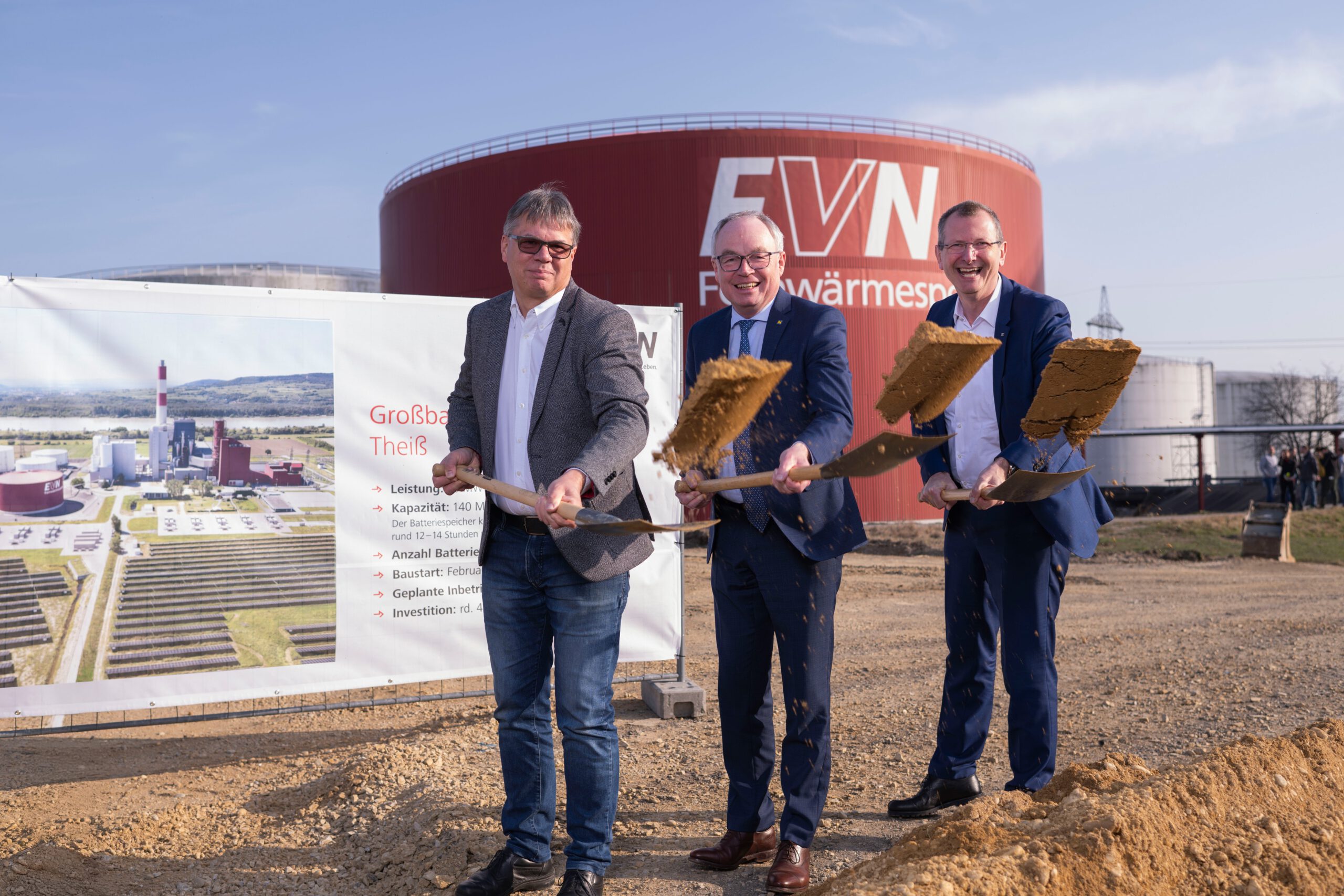
(from left to right): Mayor Stefan Löffler, Deputy Governor Stephan Pernkopf and EVN Executive Director Stefan Stallinger © EVN / Matejschek
18 March 2026 – It is a battery of enormous proportions: with an output of 70 MW and a capacity of 140 MWh, the new large-scale storage facility will be a key element in ensuring grid stability and security of supply in Lower Austria and beyond. The storage facility at the Theiss energy hub makes a significant contribution to grid stability and resilience. The battery could supply all households in St. Pölten with energy for 12 to 14 hours. In normal operation, it will balance out fluctuations in generation and consumption within the system. This relieves the strain on the grid and supports the integration of renewable generation plants with fluctuating output, such as wind and PV plants. Commissioning is scheduled for the third quarter of 2027. EVN is investing around 46 million euros in this forward-looking project. A total of 40 battery containers will be installed.
Storage as the foundation for the energy system of the future
The growing share of renewable energy generation in the grid requires flexible solutions that can absorb or release energy at short notice. “Large-scale batteries, such as our new storage facility here in Theiss, react in fractions of a second and can therefore balance fluctuations in the electricity grid much more quickly than conventional power stations. With a capacity of 70 MW, the storage facility can provide as much energy at the push of a button as a medium-sized gas-fired power station,” explains Stefan Stallinger, EVN’s Chief Technology Officer. The project is therefore a key component of a stable and climate-friendly energy system that enables the further expansion of wind and solar power. This is also intended to increase independence from energy imports from oil- and gas-producing countries such as Russia or the Arab world.
From research to industrial-scale implementation
The site in Theiss is already a key hub in Lower Austria’s energy system, featuring a combination of electrical and thermal installations. It is home to Austria’s largest district heating storage facility, with a capacity of around 50,000 m³ of hot water. A few years ago, a 5 MW power-to-heat plant was built there. This allows surplus electricity to be used to produce heat, store it temporarily and ultimately deliver it to customers via a district heating network. As part of the Green Energy Lab project “SEKOHS Theiss”, the power-to-heat system and the large-scale thermal storage facility were supplemented on a trial basis with a battery storage system with a capacity of 5 MW and 6 MWh. The Energy Economics Group at TU Wien was responsible for the scientific management of this project. The scientific partner was AIT – Austrian Institute of Technology, whilst CyberGrid handled the marketing of the flexibility services. This project was funded as part of the Climate and Energy Fund’s “Flagship Energy Region (Vorzeigeregion Energie)” programme.
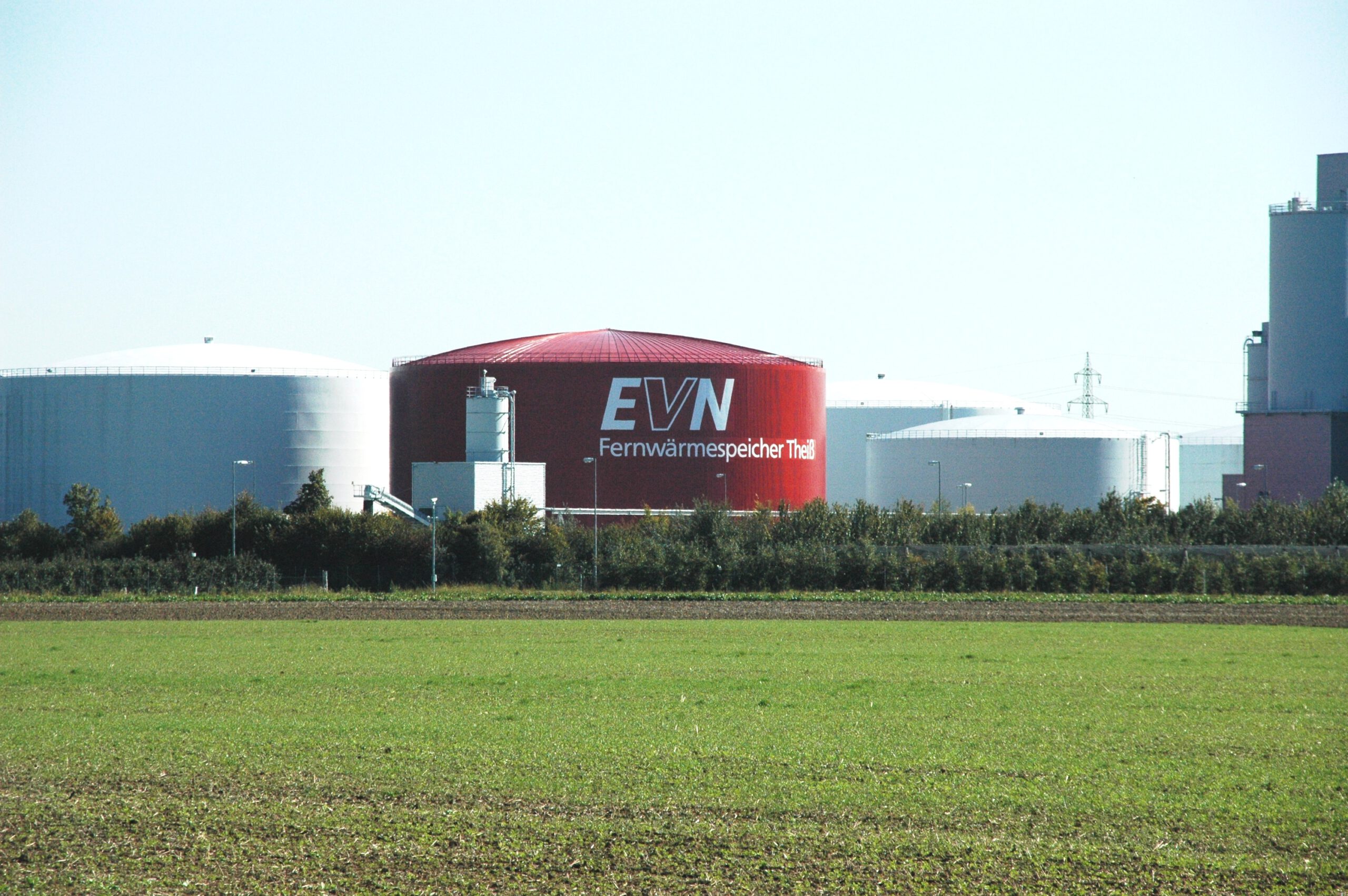
Theiss district heating storage facility with a capacity of 50,000 m³ of hot water © EVN
The construction and operation of this “small” storage facility have provided valuable experience. The upcoming expansion represents a more than twenty-fold increase in capacity and impressively demonstrates how research projects lead to large-scale investments and technical implementations, thereby becoming key elements in the architecture of a future energy system.
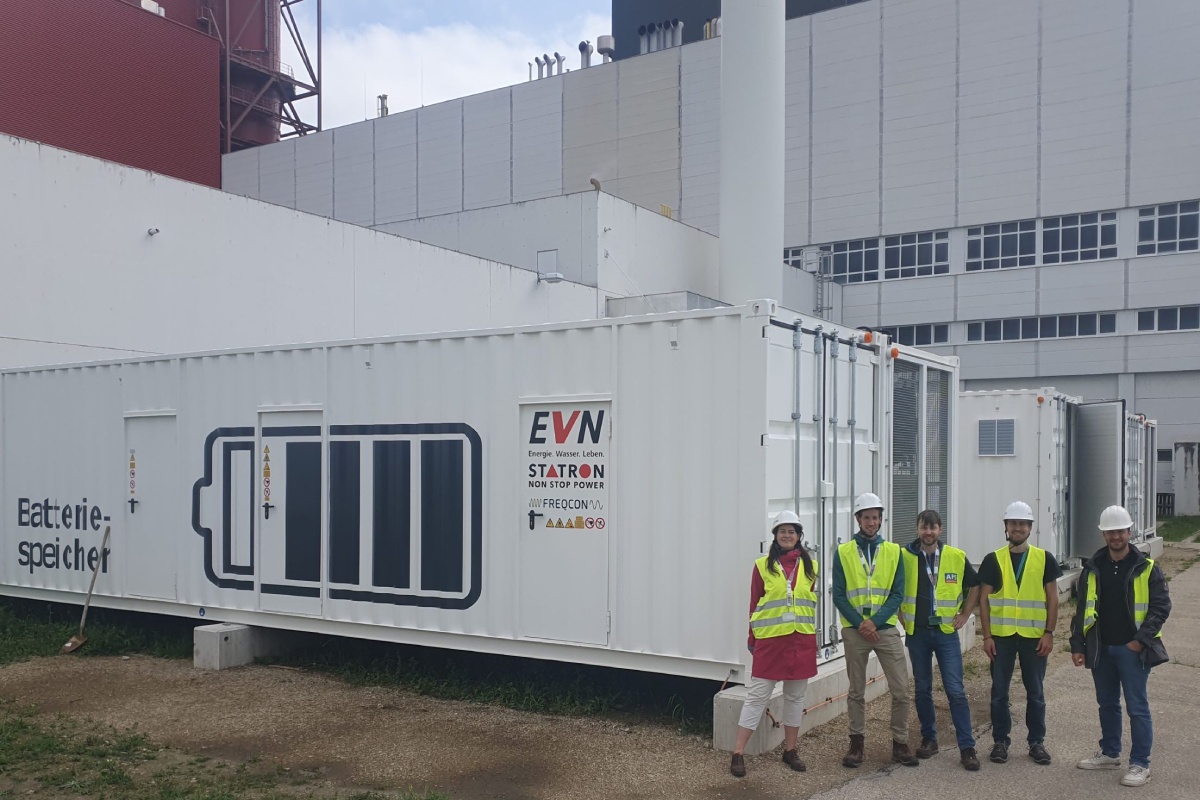
The existing battery storage system, with a capacity of 5 MW and 6 MWh, is now being expanded © Green Energy Lab / Karin Dögl
Technical specifications of the new battery storage system:
- Power: 70 MW
- Capacity: 140 MWh (2-hour storage)
- Battery containers: 40 units
- Start of construction: February 2026
- Planned commissioning: Q3 2027
- Investment: approximately 46 million euros
- Location: Theiss Energy Hub
Pilot trial using electric cars as energy storage
It is not only stationary batteries that can increase grid flexibility; electric vehicles also have – taken as a whole – considerable storage capacity. That is why Österreichische Post, EVN and Netz Niederösterreich are jointly testing bidirectional charging of electric vehicles in Mautern an der Donau. This means the vehicles can not only draw electricity but also feed it back into the public grid when needed (Vehicle-to-Grid, V2G). In combination with the photovoltaic system on the roof of the Post office, the electricity generated during the day is stored in the drive batteries whilst the vehicles are stationary – for example, in the afternoon or at weekends – and can be used later. The electric postal vehicles thus act as a large, concentrated electricity storage facility.
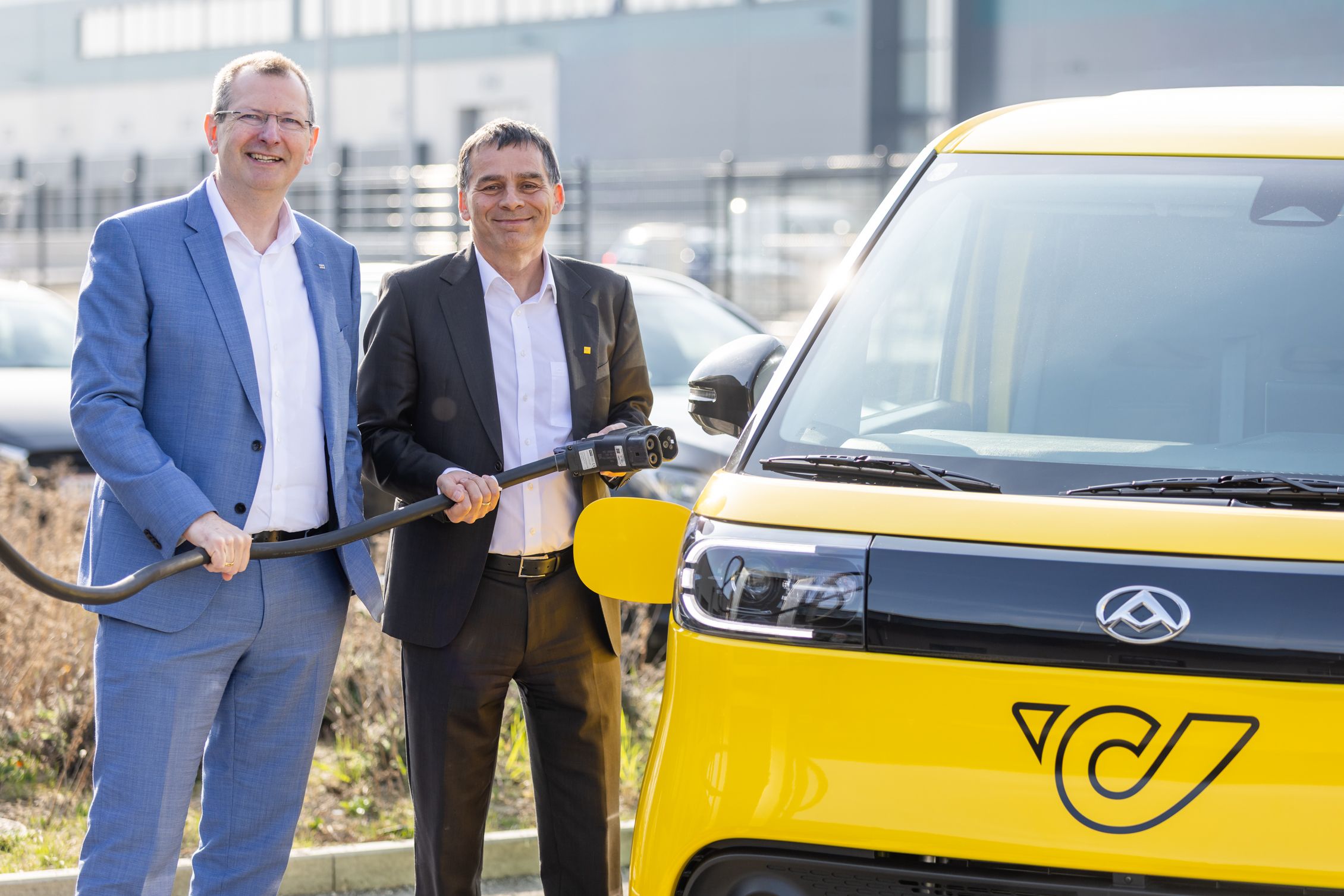
From left: Stefan Stallinger, Chief Technology Officer, EVN, with Peter Umundum, Deputy CEO, Head of Parcel & Logistics, Österreichische Post AG © Österreichische Post AG / Christian Husar
The project partners are breaking new ground, as the necessary framework for bidirectional charging is not yet in place in Austria. Netz Niederösterreich and EVN are conducting the pilot test in collaboration with Österreichische Post to gain practical experience and develop potential future standards for the energy grid.
EVN’s Chief Technical Officer Stefan Stallinger: “We need bidirectional charging to integrate electric vehicles even more intelligently into the energy system in future and to provide valuable flexibility. Together with Österreichische Post, we are taking an innovative step to test this technology in practice – and we are delighted with the strong and constructive collaboration on this pilot project.”
Incidentally, when it comes to bidirectional charging, Österreichische Post, EVN and Netz Niederösterreich can also draw on research findings from Green Energy Lab: pioneering work has already been carried out in the “Car2Flex” research project, led by TU Wien, in collaboration with around 20 partner institutions and with funding from the Climate and Energy Fund.
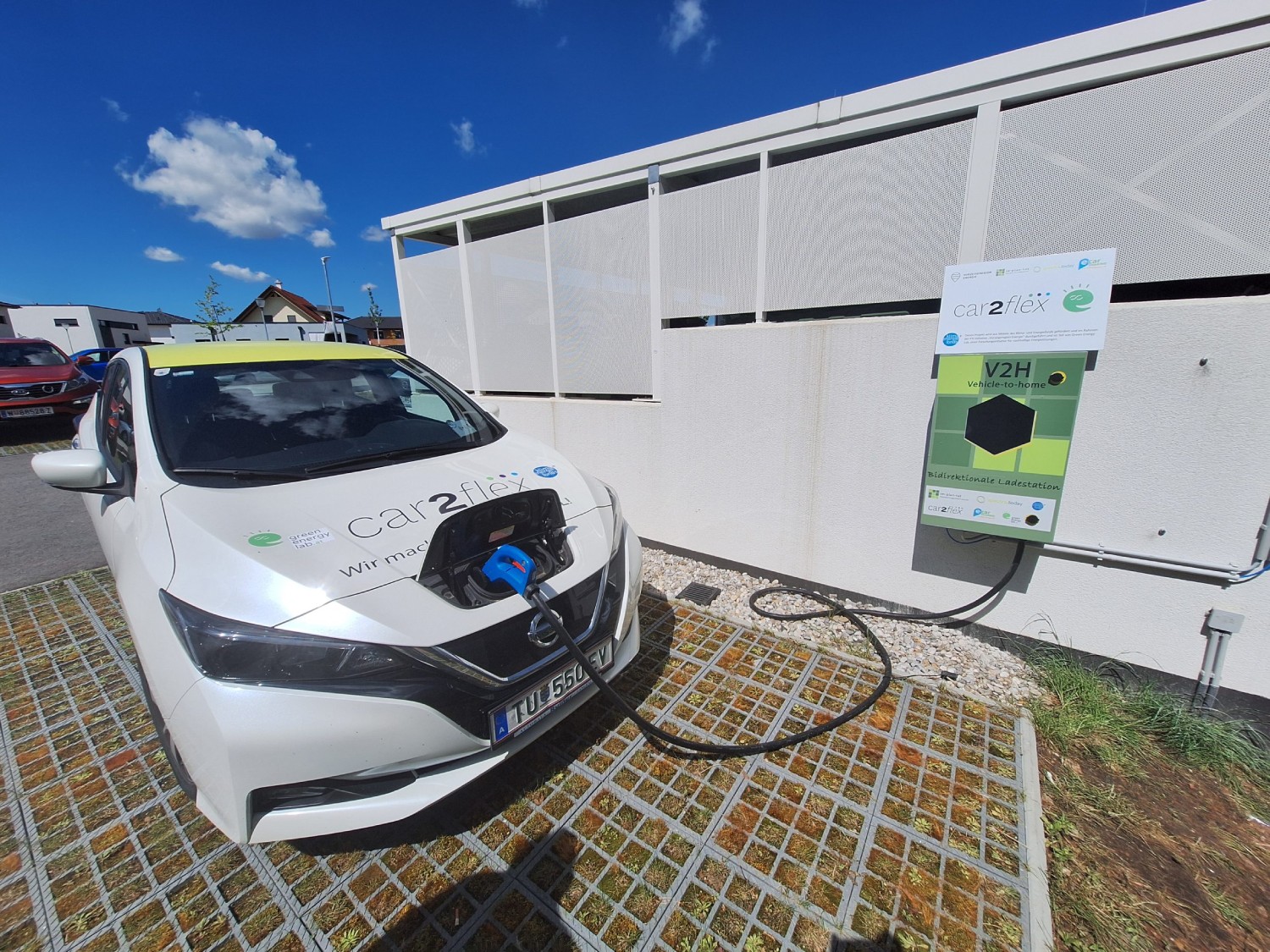
An electric car plugged into a bidirectional charging station © Green Energy Lab
Contact
Ludwig Fliesser
Communications Manager
T: +43 676 471 93 47
E: ludwig.fliesser@greenenergylab.at
Copyright © 2025