Launch of superlative wind farm in the district of Neusiedl am See
In Weiden near Neusiedl in Burgenland, 23 wind turbines with a capacity of around 122 megawatts now produce 251 million kilowatt hours of electricity per year.
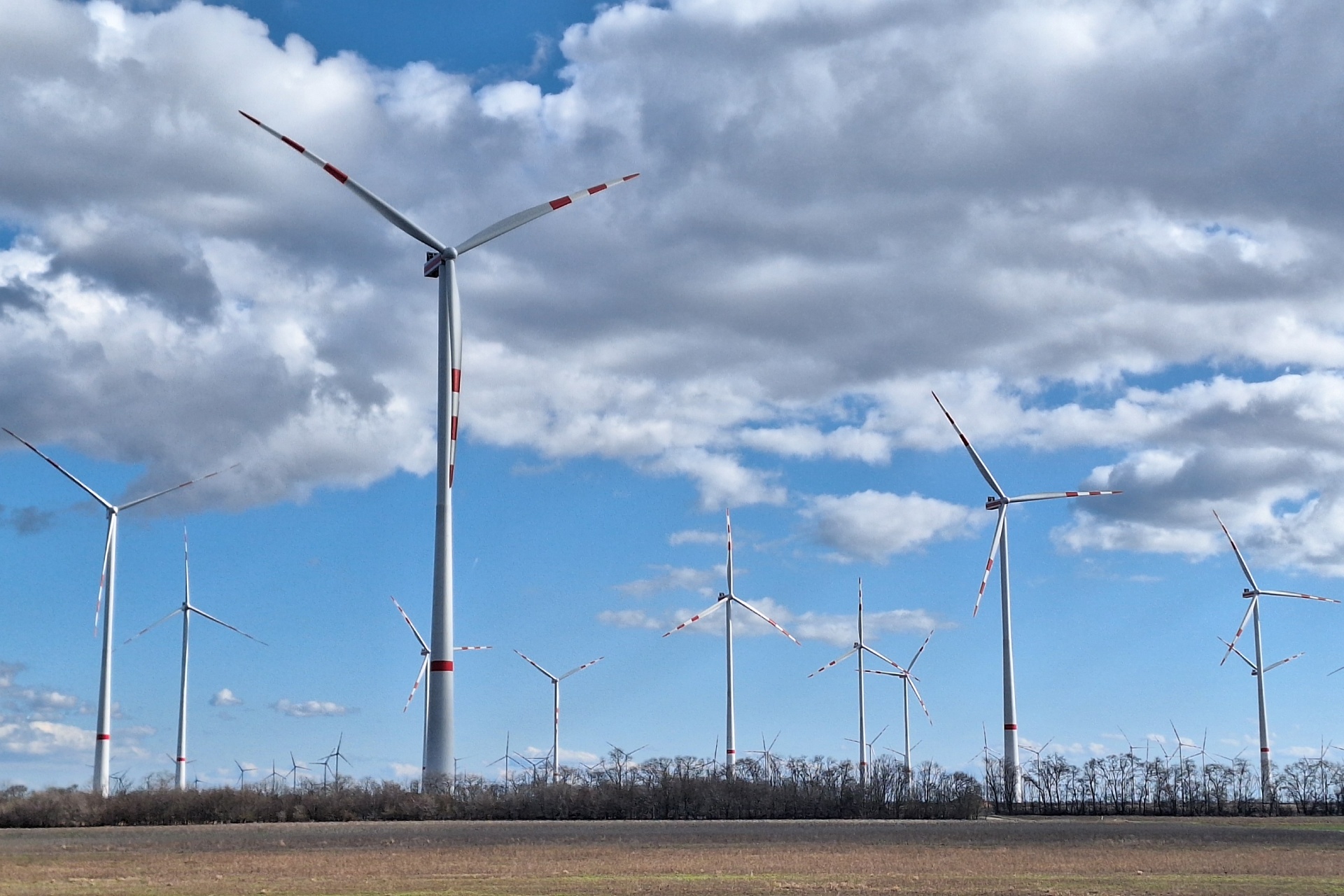
23 wind turbines in the Neusiedl / Weiden wind farm with a total capacity of 122 MW replace the previous 44 turbines. © Green Energy Lab
18 February 2026, Neusiedl/Weiden – Burgendland Energie officially commissioned its largest wind farm in glorious sunshine and perfect weather. Twenty-three wind turbines stretch up to 244 metres into the sky, with each rotor blade weighing 20 tonnes and measuring 75 metres in length – as big as an Airbus A380.
With a total output of 122 megawatts, the 23 turbines produce 251 million kilowatt hours of electricity per year – twice as much energy as the 44 old turbines at the site that they are now replacing. This means that up to 70,000 households can be supplied with wind power. Burgenland’s declared goal is to achieve energy independence by 2030. This is to be achieved with wind energy, solar power and storage. “The wind farm in Neusiedl / Weiden is the next big step on this path,” emphasizes Burgenland’s governor Hans Peter Doskozil. As one of the flagship projects of “Project Tomorrow,” the wind farm is also considered a flagship project at the European level and was implemented in collaboration with the European Investment Bank.
Innovation Minister Peter Hanke was also present at the commissioning ceremony and emphasised the importance of wind power for a seasonally independent energy mix: “Austria is dependent on imports for its electricity supply, especially in the winter months. That is why we need more wind power generation, which is particularly strong at this time of year and therefore contributes to security of supply.”
Stephan Sharma, CEO of Burgenland Energie, emphasised that the entire wind project is being carried out in harmony with nature. “At this site, we dismantled 44 old wind turbines, recycled them completely and erected 23 new, better wind turbines. The number of wind turbines has been halved, while electricity production has doubled. Austria’s largest wind project is a joint project that was only possible thanks to the cooperation of federal and state politicians, mayors, NGOs, local residents and companies,” said Sharma. The project is therefore an inspiration for all of Austria. “This major energy infrastructure project shows that we can become independent from other countries, as Austria still covers 60 percent of its energy needs from abroad. It took us only about three years from planning to construction and we are creating energy independence and energy security for the region for more than 20 years, which is how long these new wind turbines will produce electricity for the region.”
The land occupied by the wind farm will continue to be used for agricultural purposes. The next step is to expand the farm into a hybrid facility by combining it with agri-photovoltaics, allowing wind energy, solar power and agricultural products to be harvested from the same area.
Hybrid district heating with wind power
Wind power is a volatile energy source. Electricity is not always needed when the wind is blowing. This sometimes leads to negative electricity prices on the energy market, meaning that the turbines have to be shut down. Valuable electricity production is lost and the profitability of the turbines declines. As a possible solution, Burgenland Energie, together with Alois Kraußler from 4ward Energy Research and ENERCON Service Austria, Forschung Burgenland, and TBH Ingenieur, has developed an interesting solution: surplus wind power is converted into sustainable district heating at the Neusiedl am See heating plant using large heat pumps. This partially replaces the use of valuable biomass and also contributes to the decarbonisation of the heat supply. This SmartCities project, called “Hybrid District Heating Demo”, was implemented as part of the Green Energy Lab research initiative. Burgenland Energie is also already working on possible ways to increase flexibility: A pilot plant for the production of green hydrogen at the Neusiedl site is intended to show how surplus wind power can also be stored in the form of hydrogen.
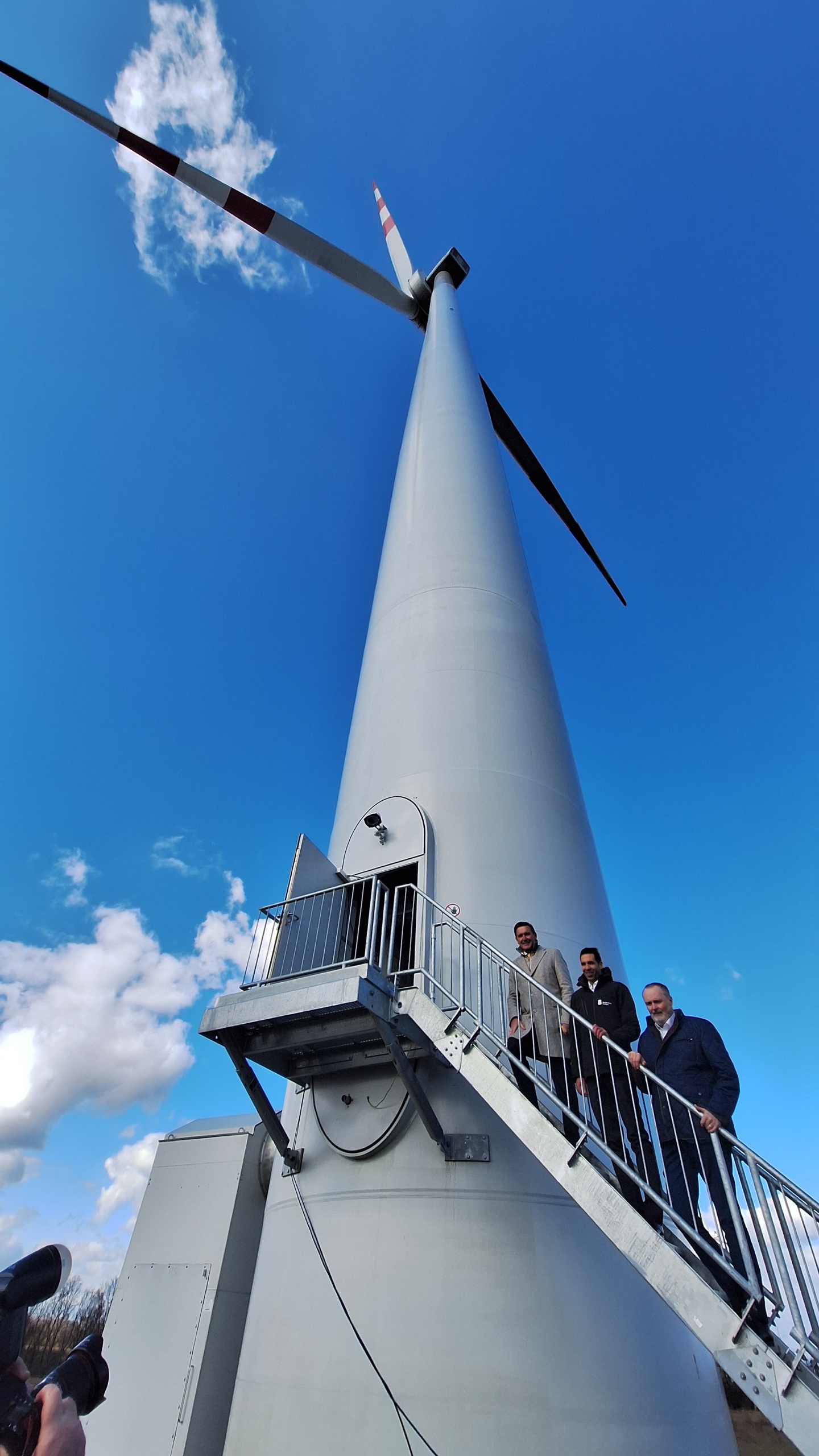
Silent giants: 244 metres in total height and 75-metre-long rotor blades plough through the air. The area between the wind turbines continues to be used for agriculture. © Green Energy Lab
Here you will find more information about the Hybrid District Heating DEMO project.
Contact
Ludwig Fliesser
Communications Manager
T: +43 676 471 93 47
E: ludwig.fliesser@greenenergylab.at
Copyright © 2025