BM Retrofit
Modernisation concepts for biomass-based district heating networks

This research project has been completed. Access the BM Retrofit Publishable Final Report as well as the profiles of the demonstration sites (available in German only) here.
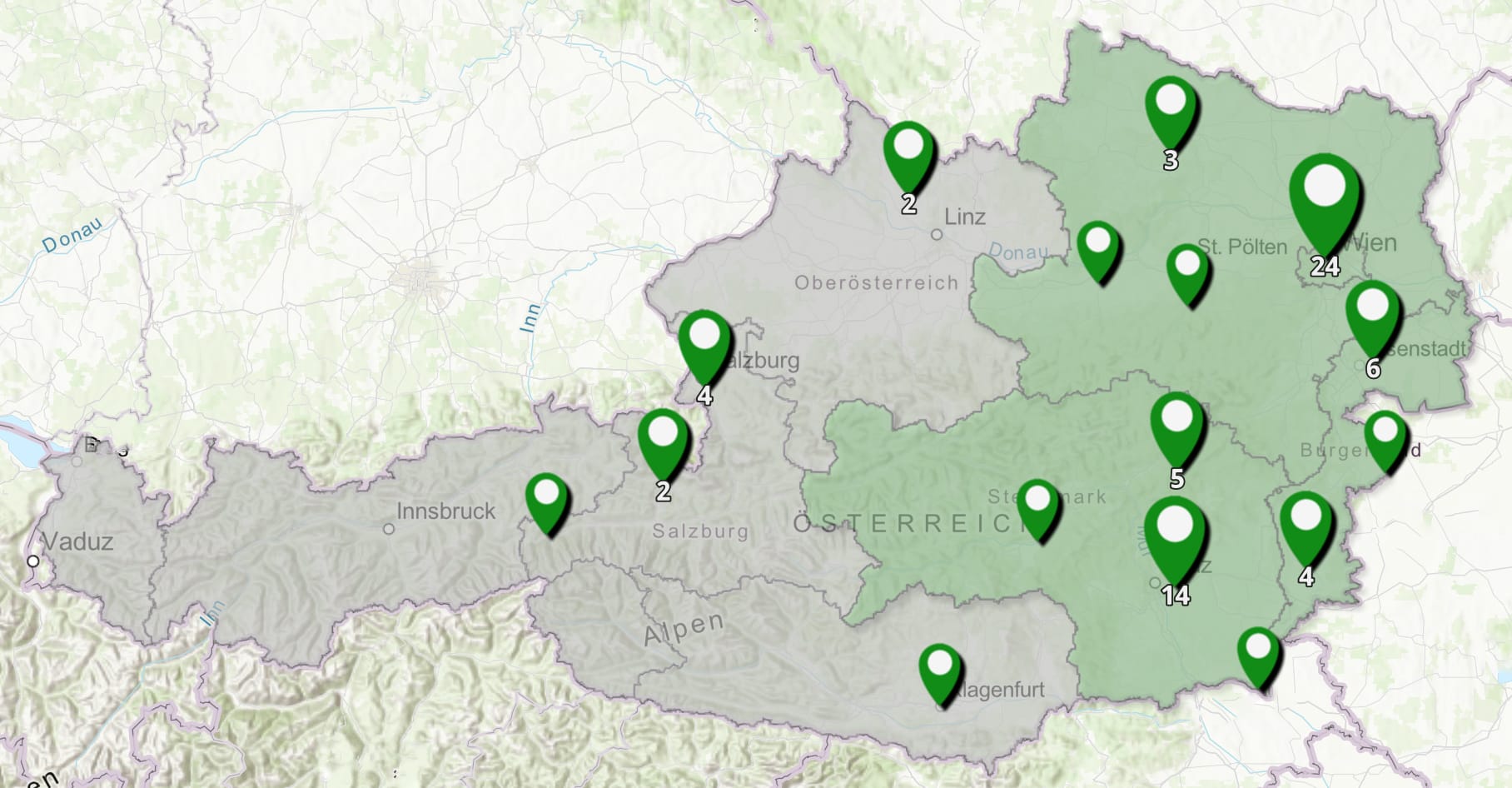
While urban heat supply in Austria was still largely based on fossil fuels and fossil-fuel-fired CHP plants 50 to 70 years ago, rural regions began establishing local district heating networks based on solid biomass around 1990. Currently, there are approximately 2,500 biomass-based district heating plants and about 150 biomass CHP plants in operation throughout Austria. Oil and/or natural gas boilers are generally used to cover peak loads and as a backup. Biomass-based district heating networks thus represent an efficient and flexible pillar of the energy transition.
However, older district heating networks in particular face a growing need for renovation and modernization in order to meet current and future technical, economic, and regulatory requirements and to enable the sustainable strategic expansion of the district heating network. In practice, concept development often lacks a systemic and holistic approach, and measures tend to be implemented in isolation rather than as coordinated packages. As a result, the existing potential for optimization often remains untapped.
Objective of the BM Retrofit project
The aim of the project was to a) adapt and further develop existing heating networks to future requirements, b) make a significant contribution to the achievement of the set climate targets and c) strengthen the economic benefits, including local added value.
Approach and methodology of the BM Retrofit project
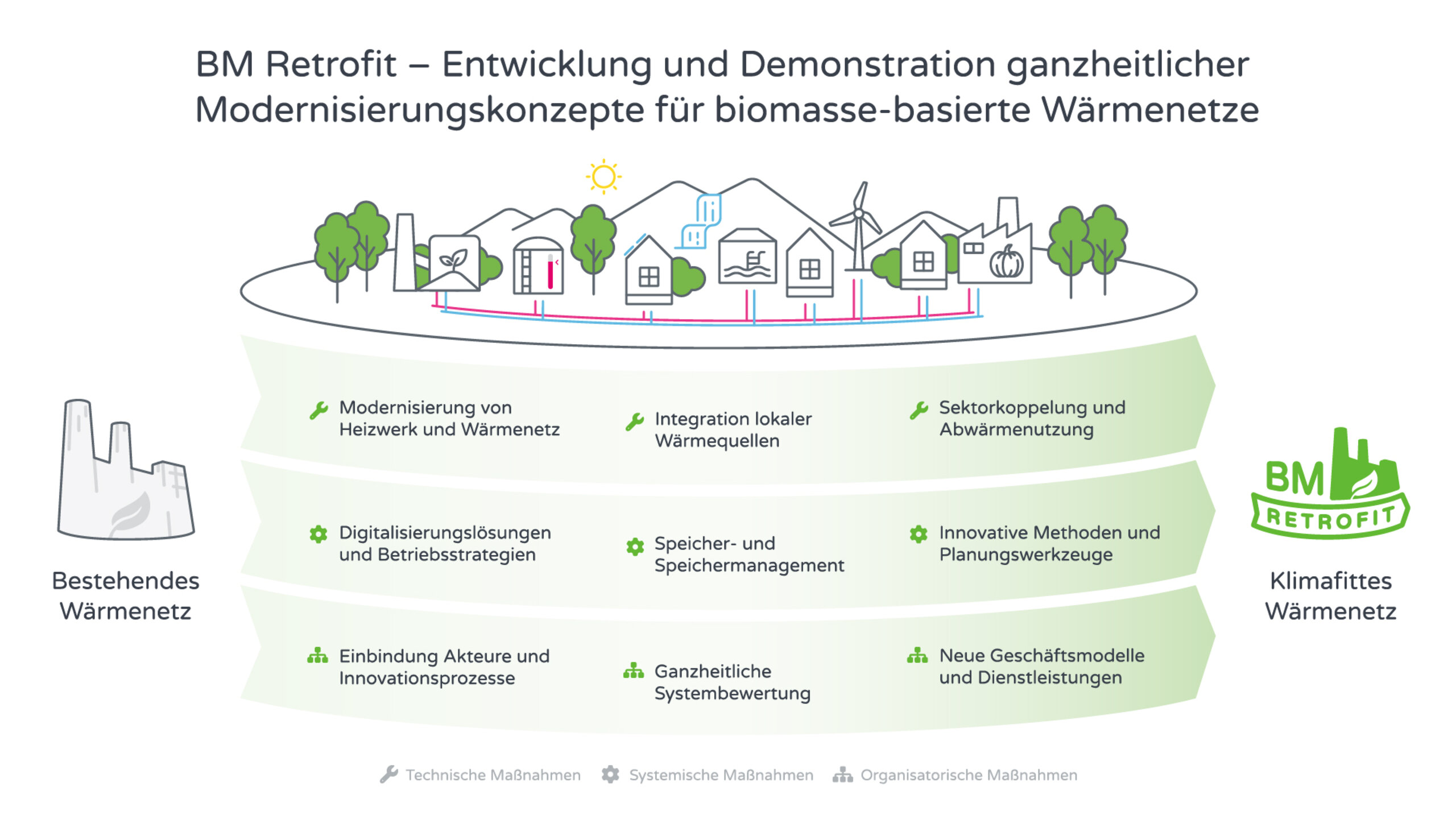
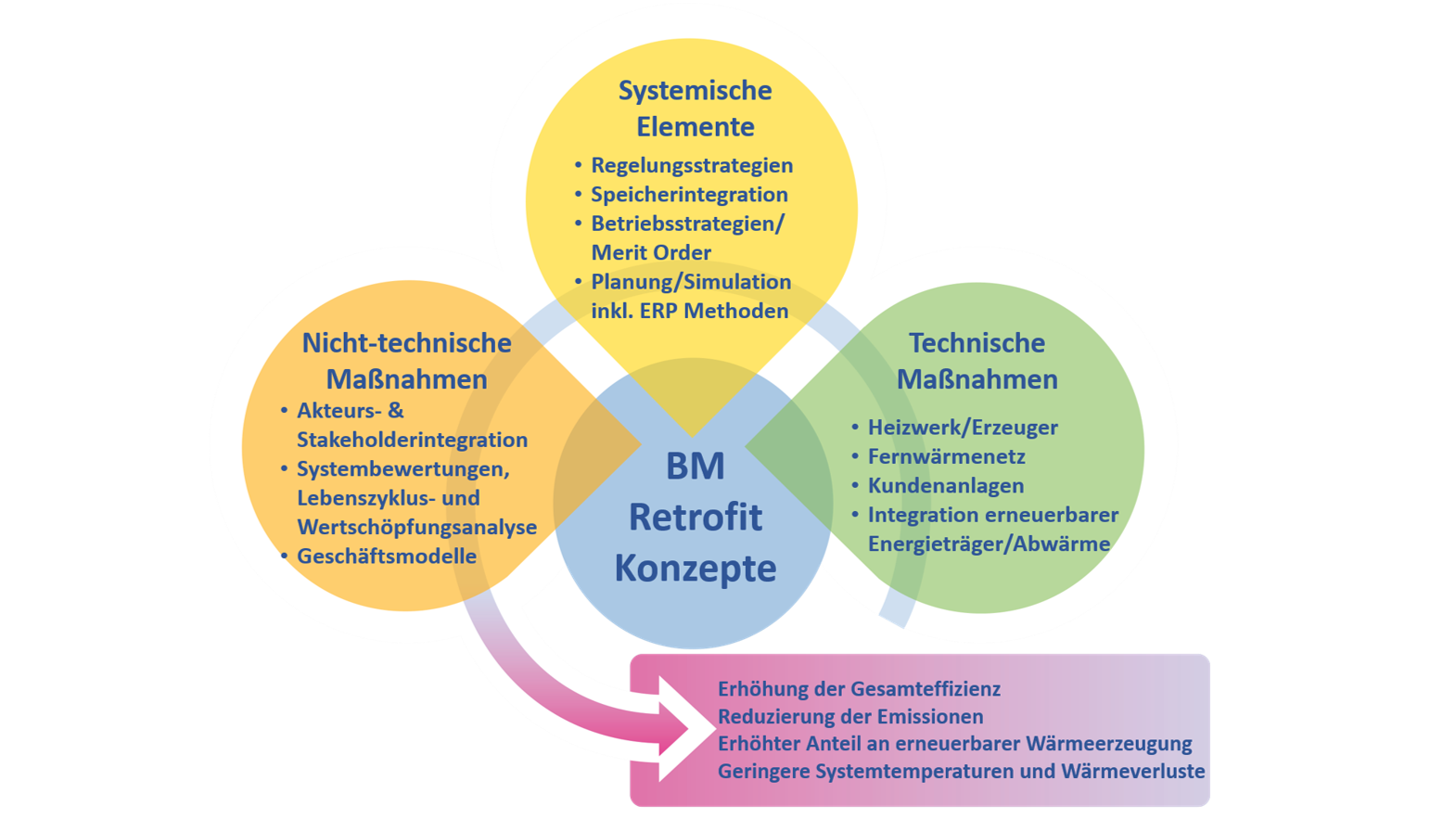
As part of the BM Retrofit project, a holistic methodological approach was developed that combines technical, organizational, and systemic measures. This integrated strategy made it possible to adapt existing district heating networks to future requirements and further develop them. The resulting concepts were demonstrated at three pilot sites, known as demonstrators, namely Wald im Pinzgau, Saalfelden, and Kreuzstetten, as well as in several specific use cases. The entire process was supported, from identifying site-specific challenges through concept development, detailed planning, and implementation to data monitoring and optimization.
The BM-Retrofit approach thus enabled the realization of a sustainable overall energy system a) with increased overall efficiency and flexibility, b) with the best possible use of renewable and local energy sources, c) by fully exploiting the synergies of existing infrastructures and d) by creating a future-proof and resilient system. This resulted in significant reductions in greenhouse gas emissions and resource consumption, as well as increased security of supply and economic efficiency.
Demonstrators of the BM Retrofit project
The technical components and innovative elements integrated into the holistic concepts (e.g., integration and optimization of thermal storage systems; implementation of efficiency-enhancing measures such as flue gas condensation systems and (absorption) heat pump systems, etc.) were further developed with a view to efficient system integration and were tested, validated, and optimized under real operating conditions at the demonstration sites. They serve as model solutions for broader replication.
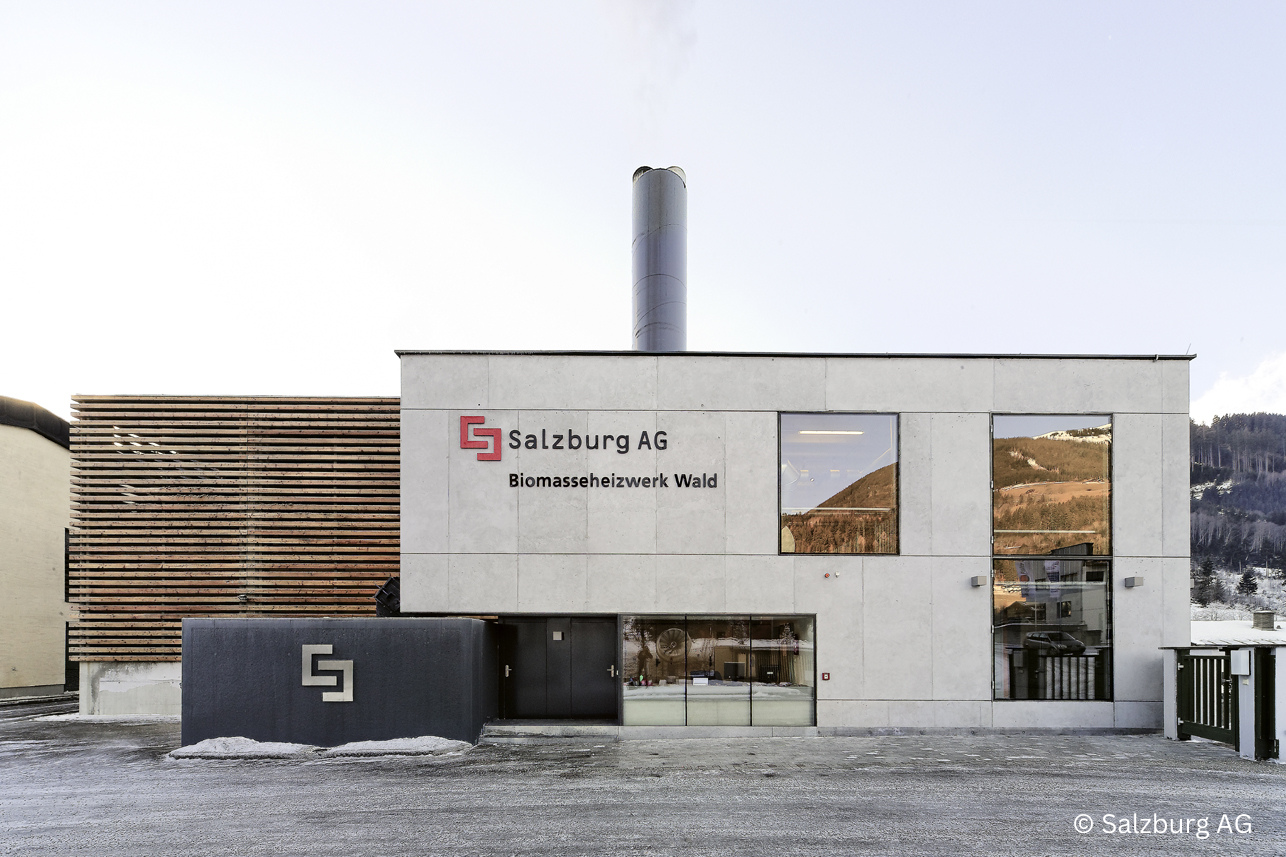
- Wald im Pinzgau: Utilization of low-temperature waste heat from a nearby hydroelectric power plant (cooling circuit) via a 250-kW heat pump; installation of a power-to-heat system to ensure operational redundancy; a 30,000-liter buffer storage tank to increase flexibility and accommodate load fluctuations.
- Saalfelden: Modernization of the biomass heating system; integration of a cascaded heat pump system (3 x 250 kW) into the flue gas condensation process to increase efficiency; innovative control strategy using CO lambda probes to optimize biomass heating operations; Modernization of the exhaust gas cleaning system (electrostatic precipitator); 150,000-liter buffer storage tank; installation of a new supply line to increase transmission capacity.
- Kreuzstetten: Targeted network densification based on network simulations; modernization and improvement of boiler control systems; optimization of buffer tank management to reduce unnecessary load fluctuations; reduction of return temperatures through secondary-side measures; implementation of a new operational and business model to increase cost-effectiveness.
Based on a comprehensive monitoring period, the technical, economic, and environmental impacts of the implemented measures were systematically analyzed. In addition, life-cycle assessments and value chain analyses were conducted to evaluate the impacts on greenhouse gas emissions, primary energy consumption, and domestic value added. An online tool and scaling scenarios were developed to assess the market potential and the impacts on the energy system. These comprehensive assessments provided valuable insights for further development and transfer to the district heating sector.
The identification and engagement of stakeholders and key players was another key factor in the project’s success. Active engagement included workshops, informational materials, and public events such as open houses to showcase innovations at the demonstration sites. These activities fostered dialogue between operators and citizens, improved transparency, strengthened public trust, and provided valuable feedback that proved crucial for acceptance.
BM Retrofit has demonstrated that the transformation of heating networks can be achieved within a relatively short period of time. A system-wide integrated approach is just as essential as the application of innovative methods that are firmly anchored in a long-term development strategy.
This research approach has enabled the implementation of smart energy systems that increase overall efficiency and flexibility while reducing emissions. It supports the optimal use of locally available energy sources, leverages synergies within existing infrastructure, and creates future-proof, sustainable, and economically viable systems. These systemic solutions have established a pioneering role in this field at the national and European levels, with high potential for replication and scalability.
For more information on the individual heating networks and demonstrators, please visit the linked detail pages.
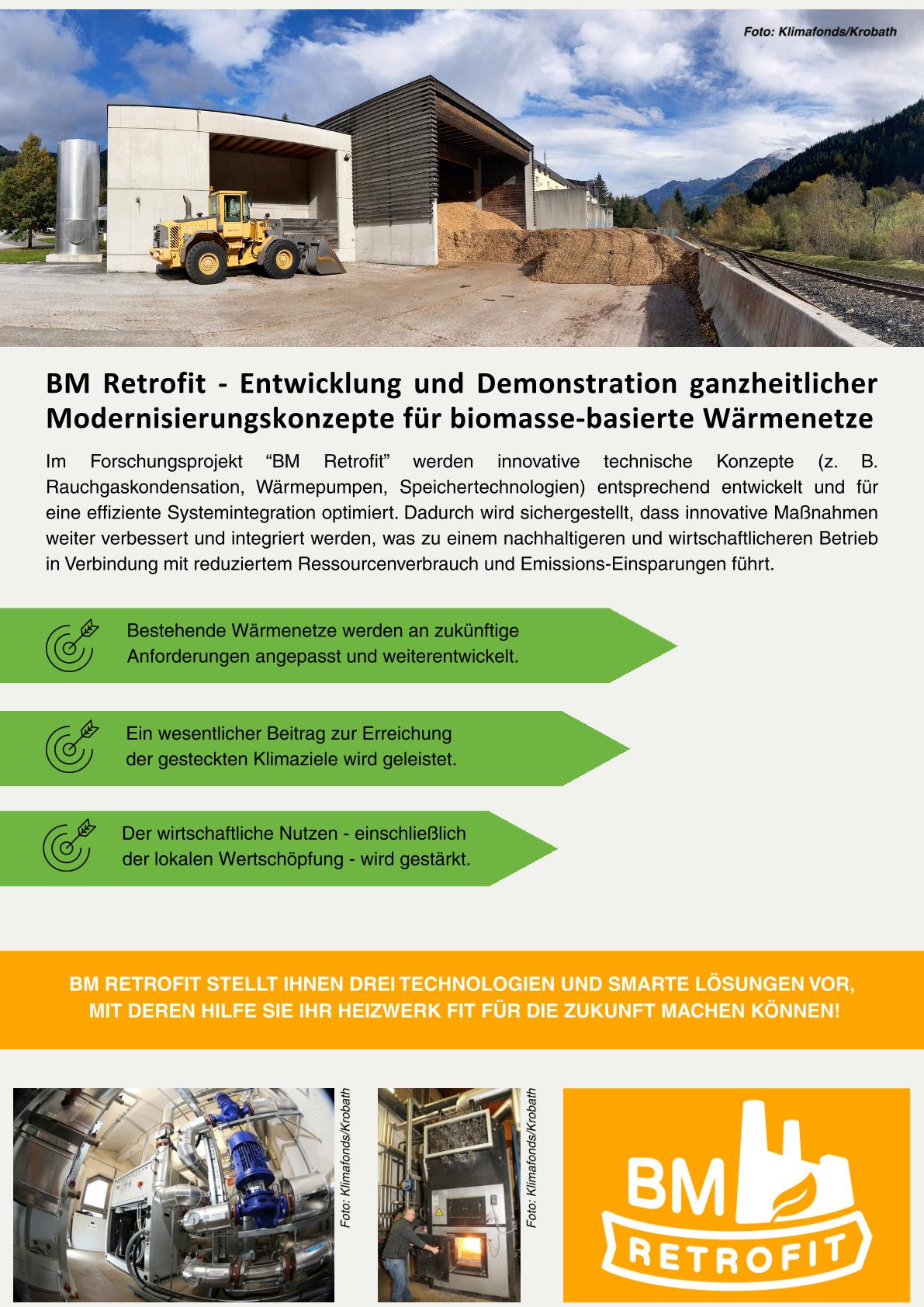
BM Retrofit solutions for heating network operators: optimised display for mobile phones. Click on the image to download the PDF (german only)! You can also find here the information sheet in print format (german only).
The following model solutions were being developed in the BM Retrofit project:
Holistic modernization concept for biomass-based District Heating systems
Media reports on the project
Increased efficiency and decarbonization of heating networks – TGA 2024 (special edition)
Around 50 percent of Austria's energy requirements are needed in the heating sector, whereby the current level of supply with fossil fuels is around 60 percent. Half of Austria's district heating supply alone is currently still based on fossil fuels. The BM Retrofit project is concerned with the development of highly efficient, biomass-based district heating systems as the basis for a climate-friendly heat supply.
To the articleIncreased efficiency and decarbonization of heating networks – AEE INTEC
As part of the practical BM Retrofit research project, holistic modernization and expansion concepts for existing biomass-based heating networks are being developed. The developed elements and solutions are implemented in various biomass-based district heating networks, so-called demonstrators, and analyzed with accompanying data evaluation and holistic system validations including life cycle and value chain analysis.
To the articleProject to modernize biomass-based heating networks successfully launched – Nachhaltige Technologien 01/2023
Biomass-based district heating networks and systems play a central role in sustainable heat supply and comprise around 2,400 systems in operation in Austria. The BM Retrofit project is dedicated to the development and demonstration of holistic modernization concepts and the expansion of existing biomass-based district heating networks and systems.
To the article